Mehr lesen
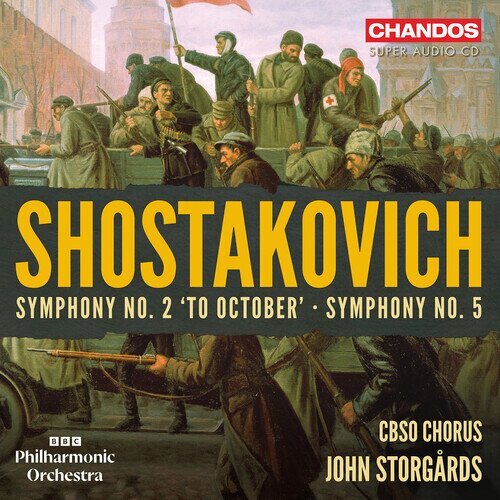
Commissioned by the Propaganda Department of the Soviet State Music Publishing House to celebrate the tenth anniversary of the October Revolution, the 'Symphonic Dedication to October' eventually became Shostakovich's Second Symphony, and was first performed, in Leningrad, in 1927. It is a short, through-composed work of around twenty minutes, it's structure involving four sections. It opens with a Largo meant to portray the primordial chaos from which order emerged, and ends with a choral setting of 'To October', a poem by Alexander Bezymensky, praising Lenin and the October Revolution. The symphony shows a marked departure in style from Shostakovich's first symphony, and is far more modernist and avant-garde. The Second Symphony made little impression, in Russia or the west, and is rarely performed. In contrast, the Fifth Symphony received a standing ovation at it's premiere, one that lasted for over half an hour, and was acclaimed both by state officials (for delivering everything that they had asked of Shostakovich) and by the public (who heard it as an expression of the suffering to which it had been subjected by Stalin). The Fifth Symphony is one of Shostakovich's best-known and most performed works, and has become standard repertoire for orchestras around the globe.